When AI Work Becomes Official
Locating Authority in AI-Assisted Coursework
Percevio Labs, with co-authors from Amazon, Duke University, Northwestern Polytechnical University and Harbin Institute of Technology
Abstract
Human oversight is often proposed as a safeguard in AI-supported decisions, but having a person involved does not always clarify what they are responsible for. In higher education, generative AI can draft course materials, suggest grades and provide feedback, raising questions about when these outputs should become part of a course or affect students.
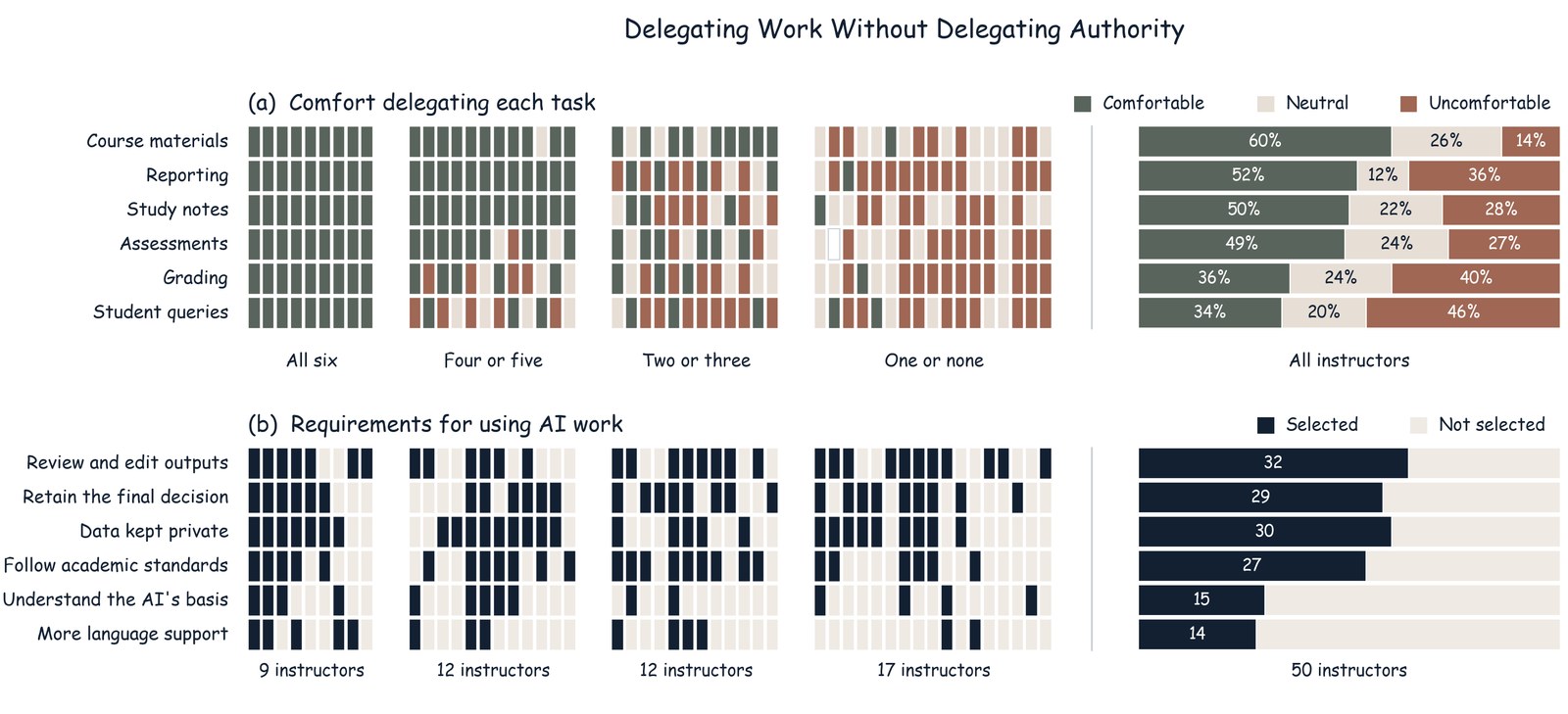
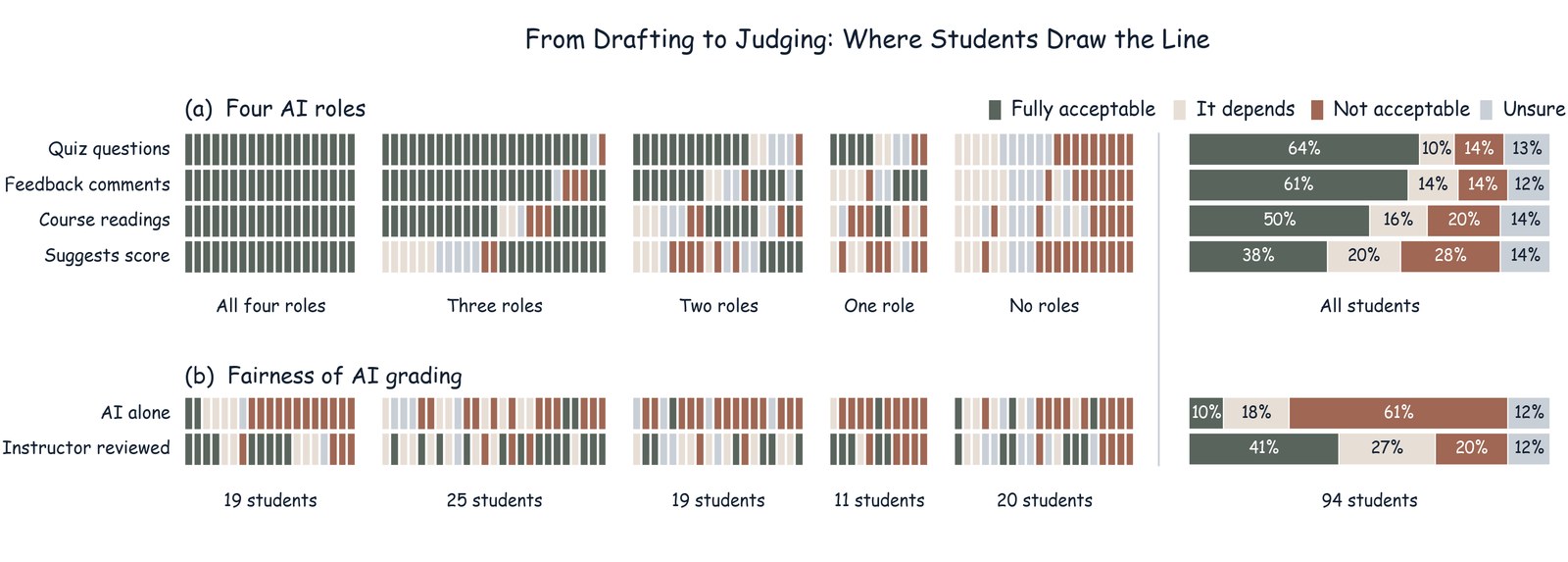
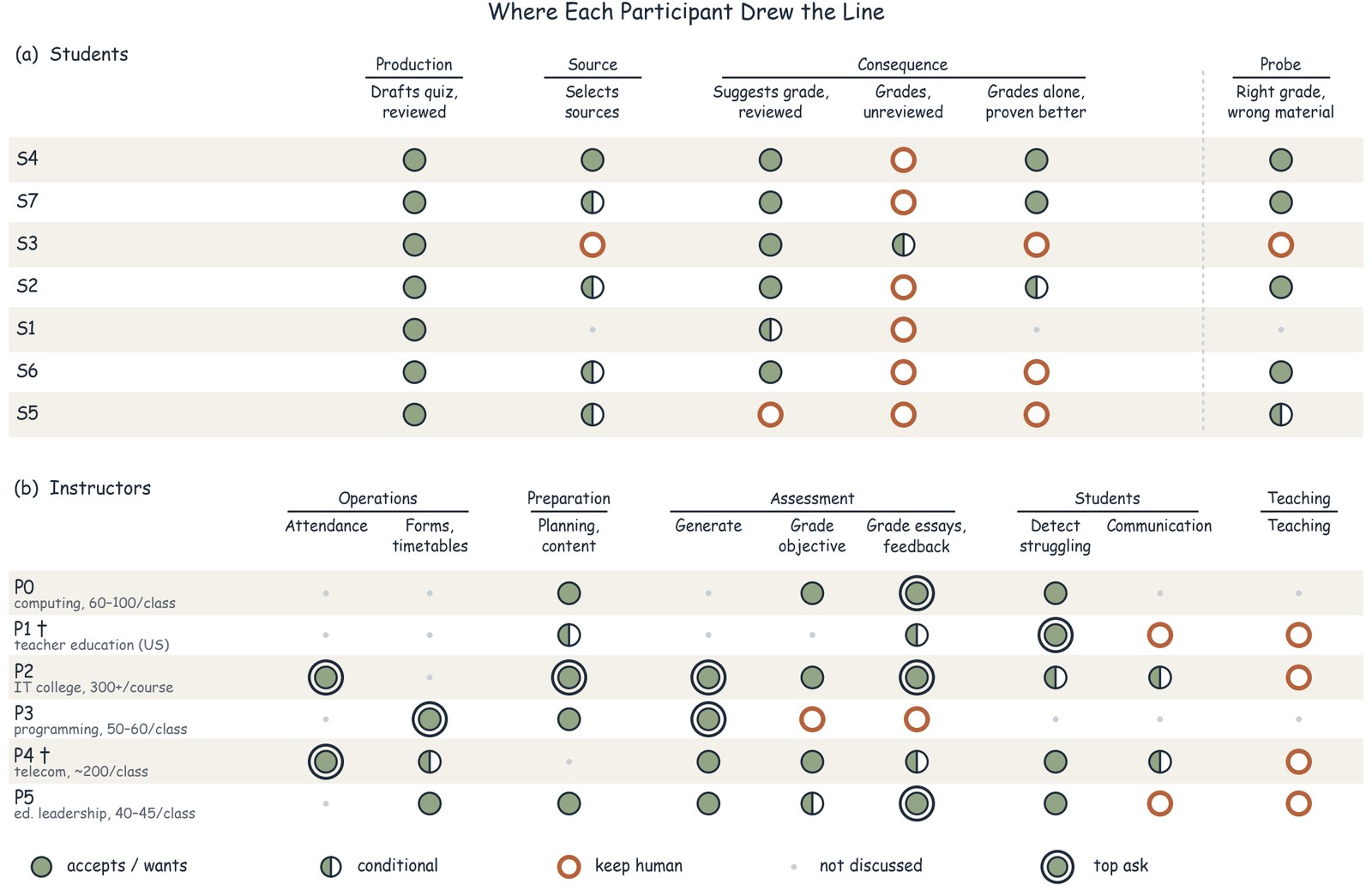
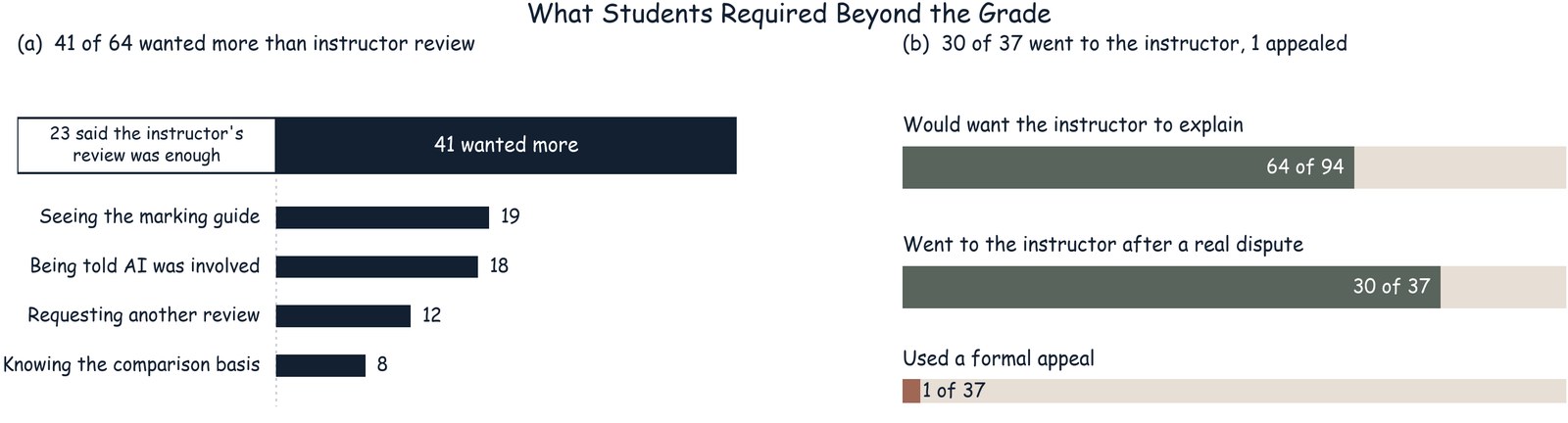
We report a formative mixed-methods study combining surveys of 67 instructors and 94 students with interviews with six instructors and seven students. Willingness to delegate work to AI did not mean willingness to give up control over academic decisions. Among instructors, 43 of 67 wanted the ability to review and edit AI outputs, and 41 wanted final academic decisions to remain with instructors. Students rated instructor-reviewed grading more favorably than AI-only grading, yet 41 of the 64 who considered reviewed grading fair or partly fair still wanted additional safeguards. Participants' concerns went beyond correctness to whether the evidence was appropriate, who was responsible, and whether a decision could be reconsidered.
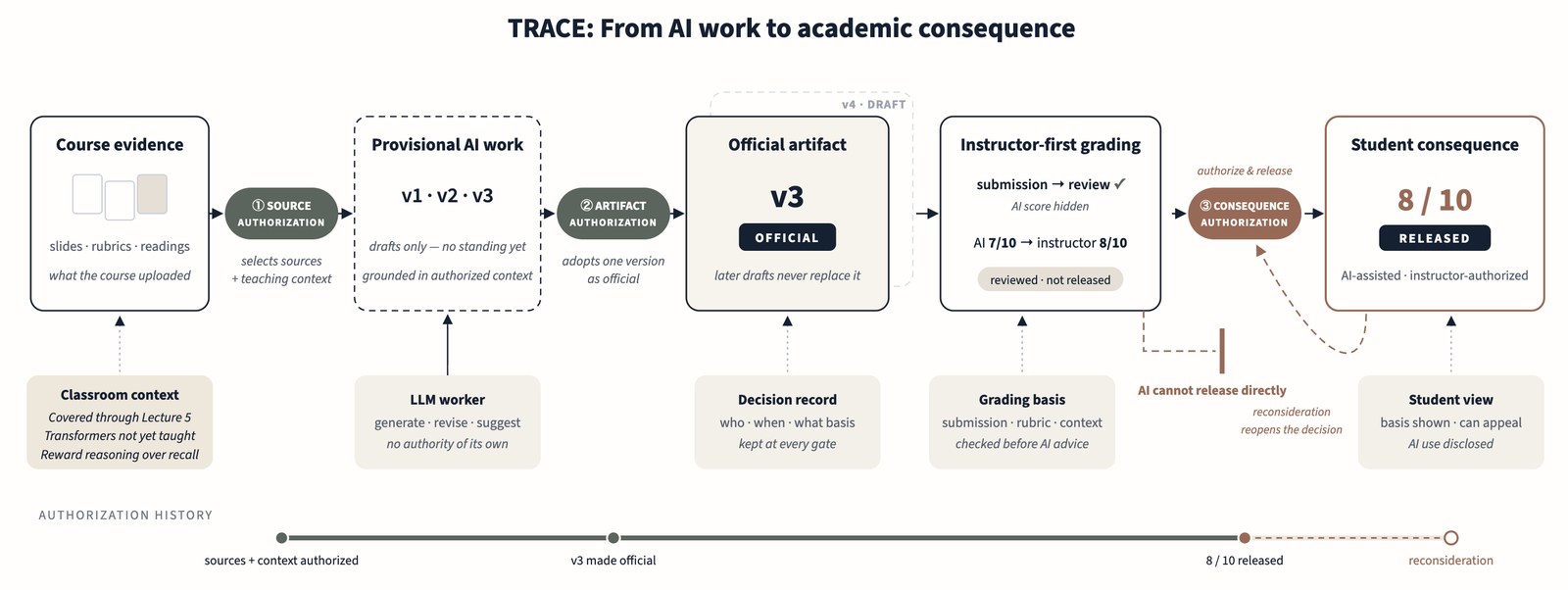
We synthesize these findings into the Coursework Authorization Model, which distinguishes what information AI may use as evidence, which AI-produced outputs become part of a course, and when those outputs may affect students, and illustrate it through TRACE, a course-grounded prototype that makes authorization decisions explicit and inspectable.
The Coursework Authorization Model
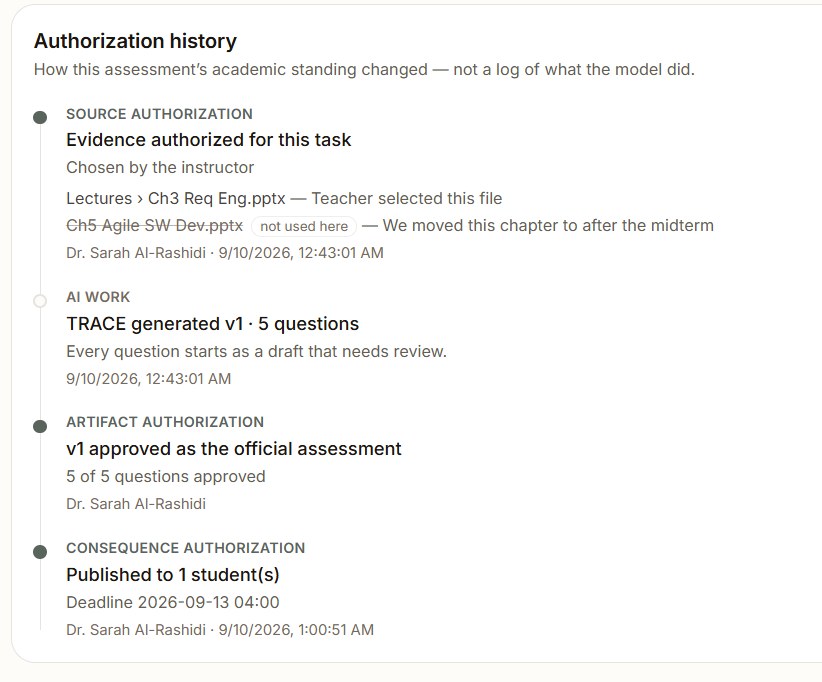
Three decisions, not one "human in the loop"
What counts as evidence
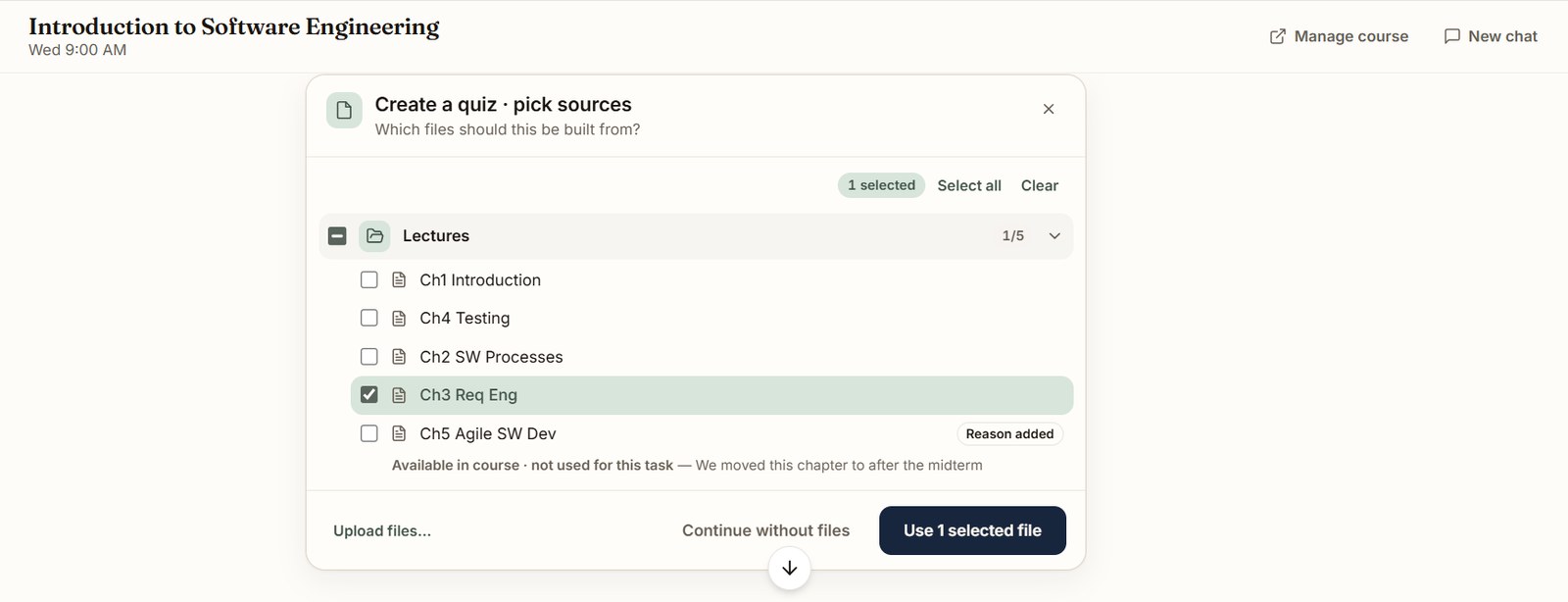
Which available course materials the AI may rely on for a given task.
What becomes official
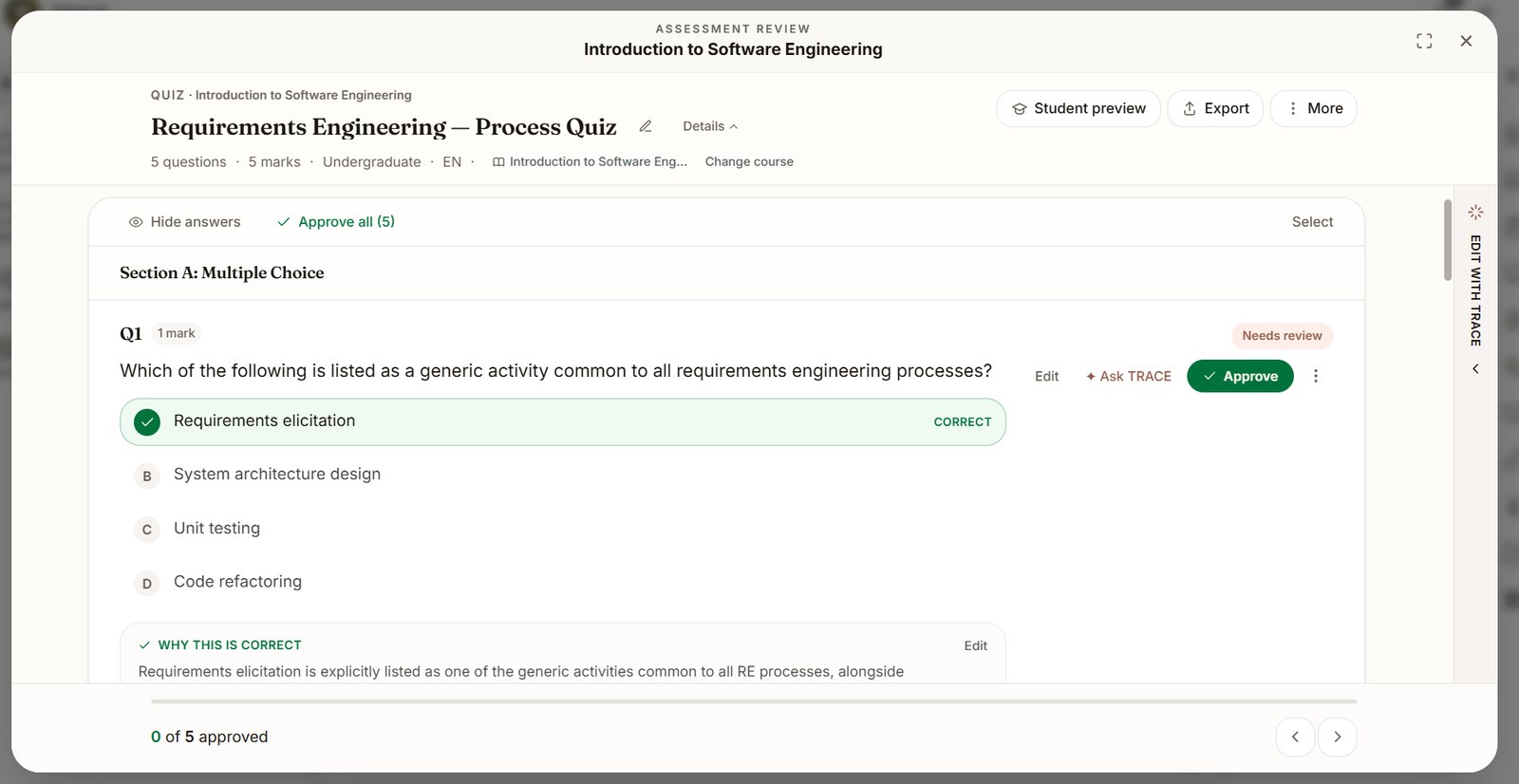
Which AI-produced version is adopted as part of the course.
When it affects students
When adopted work may be released or applied in a way that affects a student.
Meaningful oversight depends not simply on reviewing AI outputs, but on clarifying what is being authorized, who remains responsible, and how consequential decisions can be reconsidered.
Findings
People delegate work to AI, not authority over it
The prototype
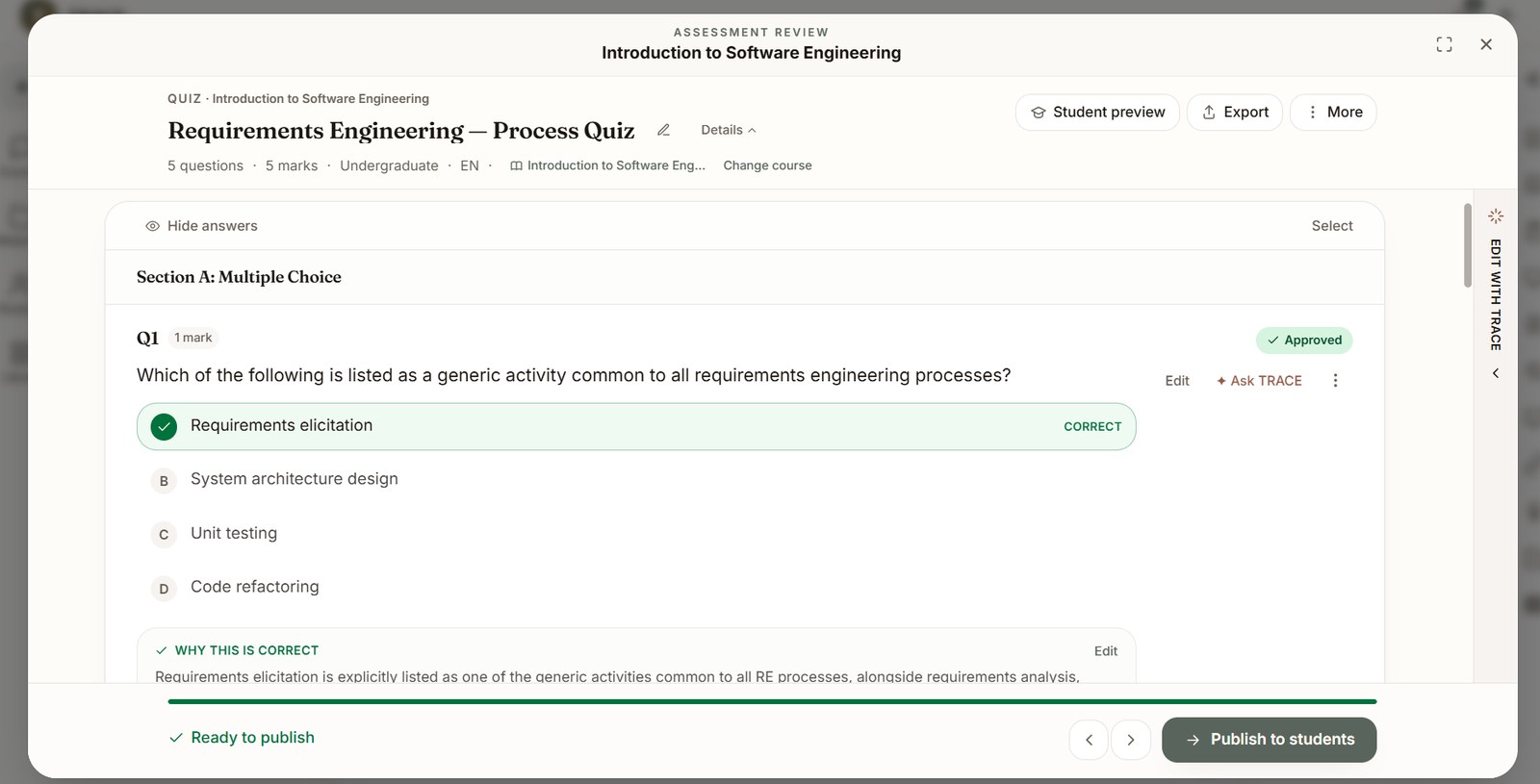
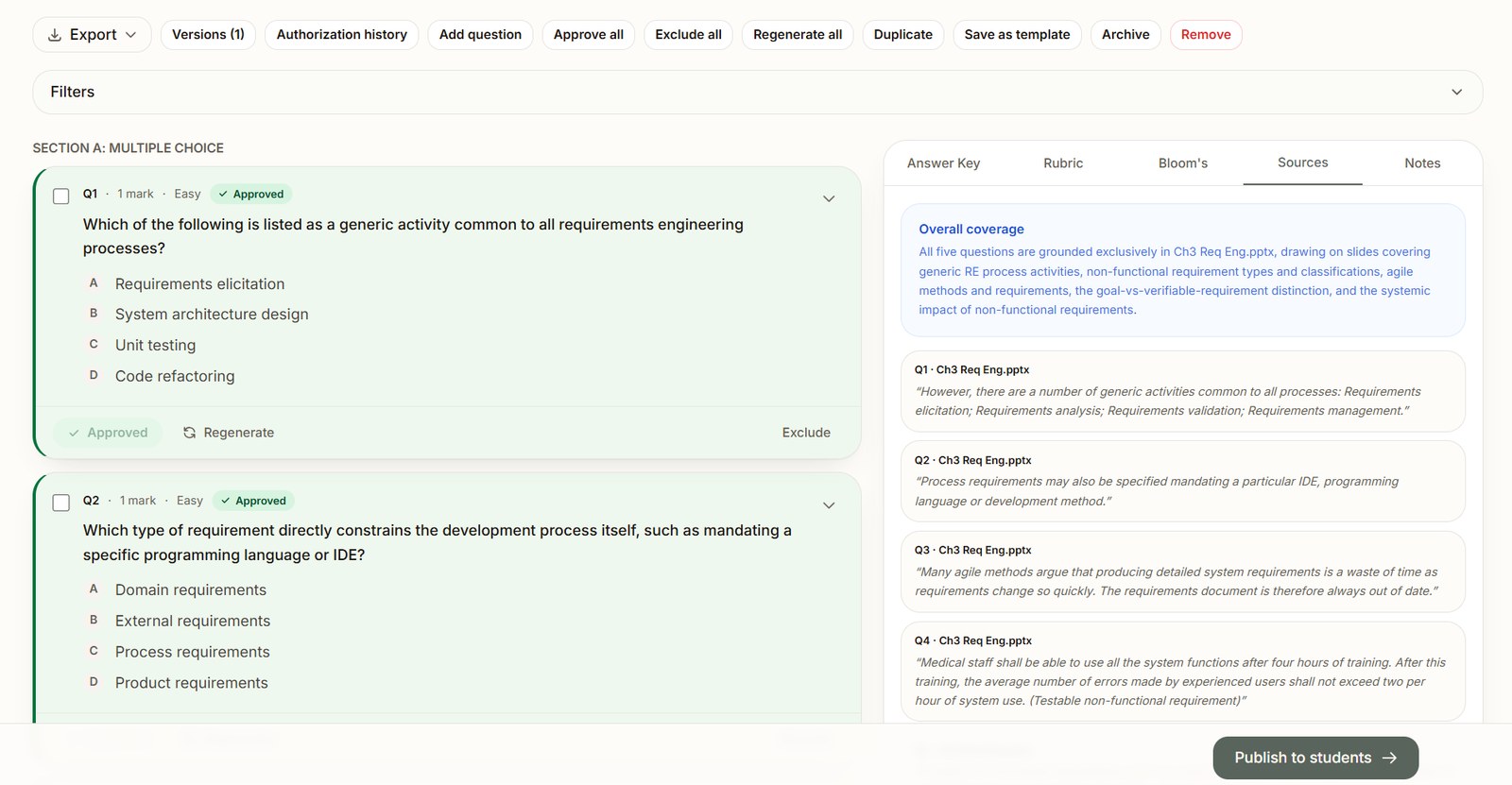
TRACE makes every authorization explicit
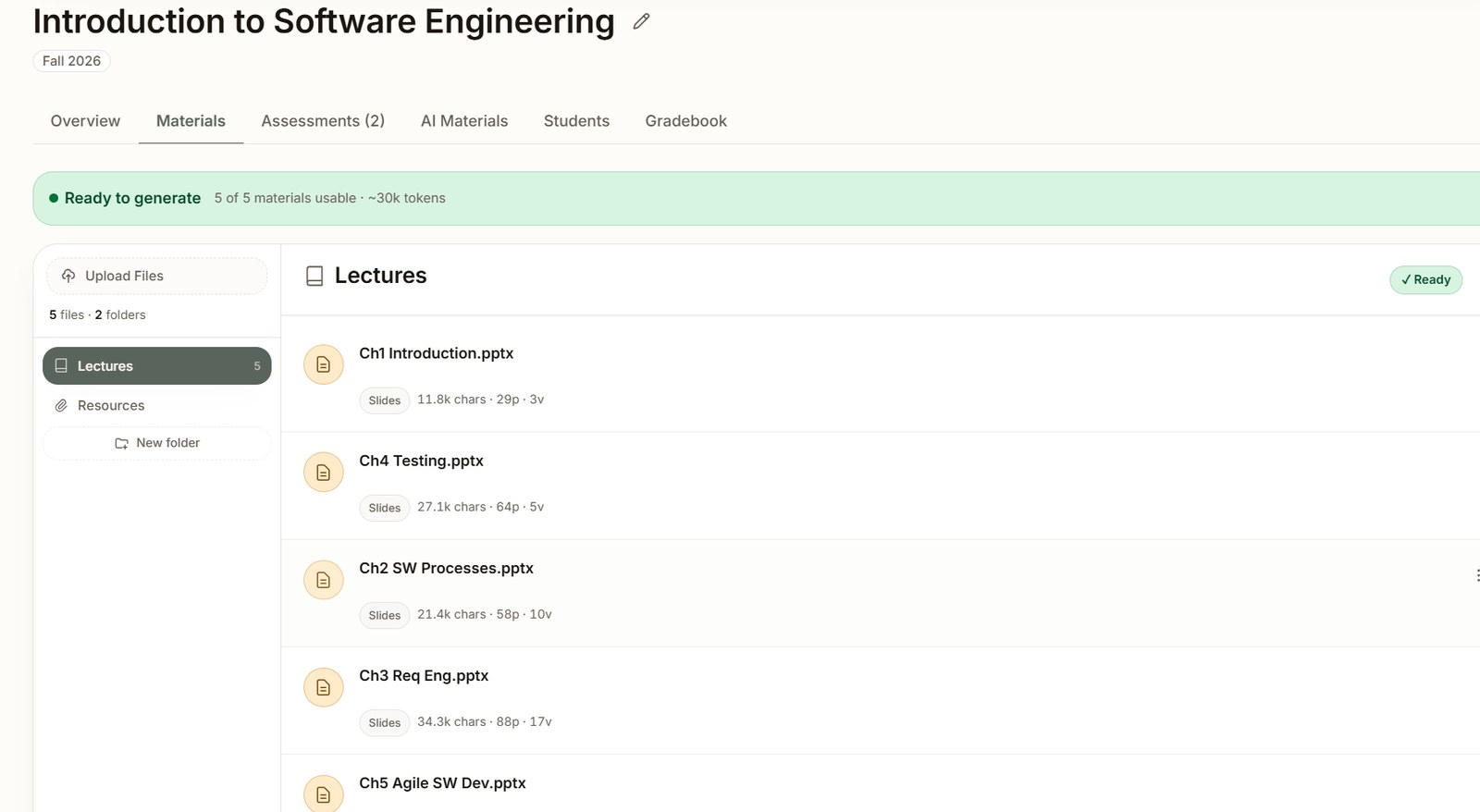
TRACE is a course-grounded assistant in which each step from course material to student consequence is a separate, recorded decision. It is now publicly deployed as Fazah.
My role
What I contributed
Built TRACE
Developed the course-grounded prototype at the center of the paper, now deployed publicly as Fazah.
Designed the study
Designed the interview protocol and led student-side data collection with bilingual instruments across three countries.
Co-developed the model and paper
Co-developed the Coursework Authorization Model and co-wrote the manuscript.
More research